Why Choosing Between Life and Health Insurance Feels So Confusing
Let’s start with a surprising truth:
Most people don’t choose the wrong insurance.
They choose nothing at all.
The Real Problem Behind Insurance Decisions
Here’s what most people think:
They just need to compare options.
Pick the better one.
Make a logical decision.
But that’s not what happens.
Because this isn’t a comparison problem.
It’s a psychology problem.
Why People Feel Stuck
Now consider this:
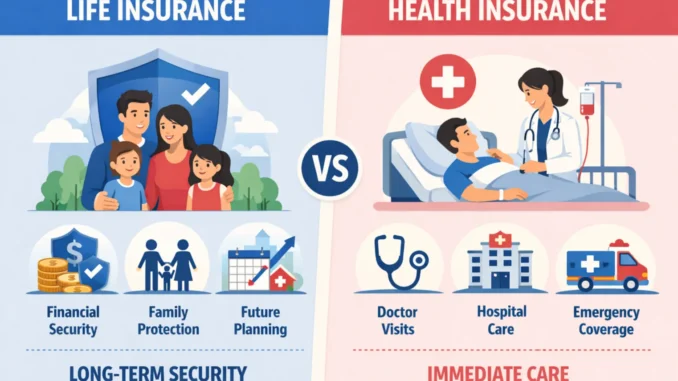
Life insurance protects the future.
Health insurance protects the present.
Both feel important.
But choosing between them?
Feels overwhelming.
And that leads to one outcome:
Delay.
Decision Fatigue Kills Action
Here’s the deal:
The more complex a decision feels…
The less likely people are to make it.
This is decision fatigue.
And insurance is full of complexity:
- Different plans
- Different benefits
- Different timelines
Too many variables.
Not enough clarity.
Risk Misperception: The Hidden Trap
Here’s where it gets interesting:
People don’t evaluate risk accurately.
They react to what feels urgent.
For example:
- Hospital bills → immediate fear
- Death risk → distant thought
So health insurance feels urgent.
Life insurance feels optional.
Even when both are critical.
Present Bias vs Future Protection
This is the core conflict:
The brain prioritizes now over later.
This is present bias.
So people ask:
“What protects me today?”
Not:
“What protects my future?”
And that shapes the decision.
The Emotional Weight of Each Choice
Let’s simplify it:
- Health insurance: Reduces immediate fear
- Life insurance: Reduces future uncertainty
And the brain always prioritizes:
Immediate relief over future security.
The Hidden Cost of Doing Nothing
Here’s the real danger:
When people can’t decide…
They delay.
And when they delay…
They stay unprotected.
- No medical coverage
- No financial protection for family
The cost of indecision is invisible.
Until it becomes real.
The Breakthrough Shift
So instead of asking:
“Which insurance is better?”
Ask this:
“What risk matters most right now?”
Because clarity removes hesitation.
Insurance Choice Is Priority Psychology
This is the shift:
You’re not choosing between two products.
You’re choosing between two types of protection:
- Immediate safety
- Future security
And your decision depends on:
Your priorities.
Your life stage.
Your perceived risk.
From Confusion to Clarity
Once you understand this…
The decision becomes easier.
Because it’s no longer about comparison.
It’s about alignment.
What’s Next?
Now the real question is:
How do life insurance and health insurance differ psychologically?
Because understanding that difference…
Is what makes the decision clear.
Let’s break it down next.
Life Insurance vs Health Insurance (Psychology-Based Comparison)
Let’s simplify this:
You’re not choosing between two policies.
You’re choosing between two types of protection.
And each one triggers a different psychological response.
Side-by-Side Psychological Comparison
| Factor | Life Insurance | Health Insurance |
|---|---|---|
| Time Focus | Future protection | Immediate protection |
| Emotional Driver | Responsibility & legacy | Fear & safety |
| Decision Trigger | Family/security concerns | Medical cost anxiety |
| Perceived Urgency | Low (delayed risk) | High (immediate risk) |
| Common Buyer Mindset | “Protect my family” | “Protect myself now” |
Life Insurance Psychology: Future-Focused Thinking
Here’s the deal:
Life insurance is about the future.
It’s not for you.
It’s for the people you leave behind.
That makes it emotionally complex.
Because it requires:
- Thinking long-term
- Facing uncomfortable realities
- Planning for uncertainty
And the brain naturally avoids that.
The Legacy Mindset
People buy life insurance when they think about:
- Their family
- Their responsibilities
- Their long-term impact
This is identity-driven.
It’s about being:
Responsible. Protective. Prepared.
But until that identity becomes strong…
The decision gets delayed.
Health Insurance Psychology: Present-Focused Safety
Now compare that to health insurance:
It’s immediate.
Personal.
And easier to understand.
Because the risk feels real:
- Hospital bills
- Accidents
- Medical emergencies
This triggers fear.
And fear drives action.
Why Health Insurance Feels More Urgent
Here’s the key insight:
The brain prioritizes visible risks.
And medical costs are visible.
Tangible.
Immediate.
So the decision feels necessary.
Not optional.
The Emotional Difference That Drives Choice
Let’s make it simple:
- Health insurance = “Protect me now”
- Life insurance = “Protect others later”
And the brain almost always chooses:
Now over later.
Why People Choose One Over the Other
Here’s what typically happens:
- Younger individuals → choose health insurance
- Families → start considering life insurance
- High earners → prioritize both
Because priorities evolve with life stage.
The Hidden Truth
People don’t choose based on logic.
They choose based on emotional priority.
Whatever feels more urgent…
Wins.
The Key Insight
Life insurance and health insurance are not competitors.
They solve different psychological needs.
- One reduces future uncertainty
- The other reduces present fear
And understanding that difference…
Is what removes confusion.
So What’s Actually Influencing Your Decision?
This is where it gets deeper.
Because hidden biases shape your choice…
Without you even realizing it.
Let’s break those down next.
The Hidden Biases That Influence Your Insurance Decision
Here’s the truth:
You’re not choosing insurance logically.
You’re choosing based on bias.
And most of it happens unconsciously.
Present Bias: Why Health Insurance Wins First
Let’s start here:
The brain prioritizes immediate needs.
Over future protection.
This is present bias.
So when choosing:
- Health insurance → feels urgent
- Life insurance → feels optional
Even if both are equally important.
The present always feels louder.
Optimism Bias: Why Life Insurance Gets Delayed
Now here’s the second bias:
People believe bad things won’t happen to them.
This is optimism bias.
It leads to thoughts like:
- “I’m still young”
- “I have time”
- “I’ll do it later”
And that delay…
Becomes long-term risk.
Loss Aversion: The Trigger That Finally Drives Action
Here’s what changes everything:
People hate losing more than they enjoy gaining.
This is loss aversion.
So when risk becomes real:
- A health scare
- A family responsibility
- A financial wake-up call
Decisions happen fast.
Because avoiding loss feels urgent.
Complexity Bias: Why People Avoid Both
Let’s not forget this:
When something feels complicated…
The brain avoids it.
This is complexity aversion.
And insurance is often:
- Full of jargon
- Hard to compare
- Difficult to understand
So instead of choosing…
People delay.
Identity Bias: How Life Stage Shapes Decisions
Now here’s something powerful:
People choose based on who they believe they are.
This is identity bias.
For example:
- Young professional → “I’m independent” → chooses health insurance
- Parent → “I’m responsible for others” → chooses life insurance
Your identity shapes your priorities.
The “I’ll Do It Later” Trap
Here’s the pattern:
People delay decisions that feel:
- Complex
- Emotional
- Future-focused
And life insurance checks all three.
So it gets postponed.
Repeatedly.
The Moment Biases Shift
So when do people finally act?
When their perception changes.
Usually triggered by:
- A major life event
- A financial scare
- A new responsibility
Suddenly:
Future risk feels real.
And action becomes urgent.
The Core Insight
You don’t choose insurance based on facts.
You choose based on feelings.
And those feelings are shaped by bias.
The more aware you are of them…
The better your decision becomes.
So How Do You Make the Right Choice?
This is where everything becomes clear.
Because the best decision is not emotional.
It’s structured.
Let’s break down a simple framework to choose the right coverage next.
How to Choose the Right Insurance (Without Overthinking It)
Now let’s simplify everything:
You understand the psychology.
You see the biases.
But here’s what matters most:
Making the right decision.
The Biggest Mistake People Make
Let’s be clear:
Most people treat this like a choice:
Life insurance or health insurance.
But that’s the wrong frame.
Because they solve different problems.
And require a different approach.
The Smart Decision Framework
Here’s a simple system that works:
Assess → Prioritize → Layer → Expand
Follow this… and confusion disappears.
Step 1: Assess Your Current Risk
Start here:
Ask yourself:
“What could impact me financially right now?”
- Medical emergencies?
- Accidents?
- Income loss?
This defines your immediate exposure.
Step 2: Prioritize Immediate Protection
Here’s the deal:
If you have no coverage…
Start with health insurance.
Why?
Because:
- Medical costs are immediate
- Risk is frequent
- Impact is unpredictable
This reduces short-term vulnerability.
Step 3: Evaluate Your Responsibilities
Now look forward:
Ask:
“Who depends on me?”
- Family?
- Children?
- Financial obligations?
If the answer is yes…
Life insurance becomes essential.
Step 4: Layer Your Protection
Here’s the key insight:
This is not an either/or decision.
It’s a layered strategy.
Think of it like this:
- Health insurance → protects your present
- Life insurance → protects your future
Together… they create full coverage.
Step 5: Expand as Your Life Evolves
Your needs will change.
So your coverage should too.
As you grow:
- Increase life coverage
- Upgrade health plans
- Add additional protection
Because protection is not static.
It evolves with you.
The Simplicity Rule
Here’s something important:
The best decision is the one you actually make.
Not the perfect one you delay.
So don’t overcomplicate it.
Start simple.
Then improve.
The Identity Shift That Changes Everything
Let’s reframe your thinking:
You’re not buying insurance.
You’re building a protection strategy.
For:
- Your health
- Your finances
- Your family
And that’s a powerful decision.
From Confusion to Control
This is the final insight:
Insurance decisions feel hard…
Because they’re framed incorrectly.
Once you shift from comparison → strategy…
Clarity appears.
And action follows.
Your Next Step
Start today:
- Assess your immediate risks
- Get basic health coverage
- Evaluate life insurance needs
- Build from there
Because the goal is not perfection.
It’s protection.
And once you align your decisions with your life stage…
You won’t just choose correctly.
You’ll choose confidently.