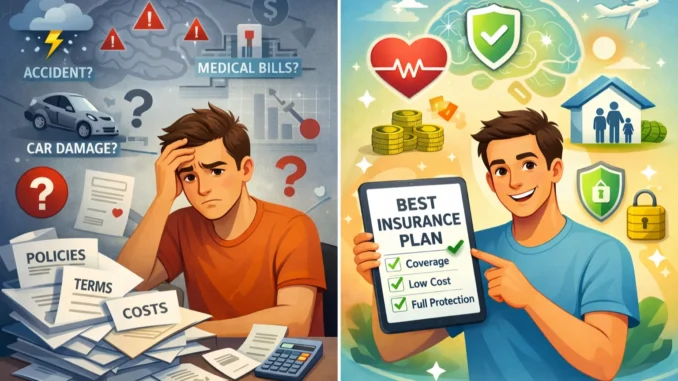
Why People Delay Buying Insurance (Even When They Know They Need It)
Let’s start with something strange:
People insure their phones instantly.
But delay life insurance for years.
Why?
It’s not about money.
It’s about psychology.
The Real Problem With Insurance Sales
Here’s what most insurance companies believe:
If people understand the benefits…
They’ll buy.
So they explain policies.
List features.
Break down coverage.
And still… people hesitate.
Because insurance is not a logic-driven purchase.
It’s a perception-driven decision.
Why Customers Hesitate (Even When They Agree)
Now consider this:
Most people already know they need insurance.
They’re not unaware.
They’re undecided.
And that hesitation comes from three psychological barriers:
- “Nothing will happen to me”
- “I’ll deal with it later”
- “This is too complicated”
Let’s break these down.
Optimism Bias: “It Won’t Happen to Me”
Here’s the first problem:
People underestimate risk.
This is called optimism bias.
They believe:
- Accidents happen to others
- Illness is unlikely
- Disasters are rare
So they delay protection.
Even when they know it’s important.
Present Bias: “I’ll Do It Later”
Now here’s the second issue:
People prioritize the present over the future.
This is present bias.
Insurance feels like:
A cost today…
For a benefit later.
And the brain resists that.
So the decision gets postponed.
Again and again.
Complexity Overload: “This Is Too Much”
Here’s the third barrier:
Insurance feels complicated.
Policies.
Terms.
Conditions.
Too much information.
And when the brain feels overwhelmed…
It avoids the decision.
This is cognitive overload.
The Hidden Cost of Delay
Now here’s the real danger:
Delaying insurance feels harmless.
Until it isn’t.
- Unexpected accidents
- Medical emergencies
- Financial instability
The cost of inaction…
Is always higher than the cost of action.
The Emotional Gap
Here’s the core issue:
Insurance is based on future risk.
But decisions are based on present emotion.
And that gap creates hesitation.
If people don’t feel the risk…
They don’t act.
The Breakthrough Shift
So instead of asking:
“How do we explain insurance better?”
Ask this:
“How do we make risk feel real?”
Because clarity creates action.
Not information.
Insurance Is Risk Perception Design
This is the shift:
Insurance is not about policies.
It’s about perception.
It’s about helping people:
- Understand risk
- Feel urgency
- Trust the solution
In other words:
You’re not selling coverage.
You’re reducing uncertainty.
From Selling to Reframing Risk
Once you understand this…
Everything changes.
You stop pushing policies.
And start shaping perception.
Because when risk becomes clear…
Decisions become easy.
What’s Next?
Now the real question is:
Which strategies actually increase insurance conversions?
Because not all marketing works.
Some confuse users.
Others move them to action.
Let’s break down the highest-converting insurance strategies next.
High-Converting Insurance Marketing Strategies (With Tools)
Let’s get practical:
You now understand the problem—people delay insurance.
So how do you move them to act?
By changing perception.
Quick Strategy Breakdown
| Strategy | Psychological Trigger | Impact |
|---|---|---|
| Risk Visualization | Fear clarity | Faster decisions |
| Simplified Plans | Cognitive ease | Higher conversions |
| Social Proof | Trust & safety | Reduced hesitation |
| Urgency Framing | Loss aversion | Immediate action |
| Personalized Quotes | Relevance | Higher engagement |
| Storytelling | Emotional connection | Stronger persuasion |
1. Risk Visualization – Make the Invisible Real
Here’s the deal:
People don’t act on abstract risk.
They act on visible risk.
So make it real:
- Show real-life scenarios
- Use calculators (cost of accidents)
- Highlight financial impact
If users can see the risk…
They feel it.
And when they feel it…
They act.
2. Simplified Plans – Reduce Cognitive Load
Now consider this:
Too many options kill decisions.
Insurance is often overwhelming.
Fix it by:
- Offering 2–3 clear plans
- Using simple language
- Highlighting key benefits
Clarity beats complexity.
3. Social Proof – Build Instant Trust
Here’s something critical:
Insurance is built on trust.
Without it… no sale.
So show:
- Customer testimonials
- Claim success stories
- User numbers
Because people trust people.
Not policies.
4. Urgency Framing – Trigger Action Now
Let’s activate urgency:
People act faster when they might lose something.
Use:
- “Lock in your rate today”
- “Coverage starts immediately”
- “Don’t risk being unprotected”
This reduces delay.
And increases conversions.
5. Personalized Quotes – Make It Relevant
Here’s the truth:
Generic offers feel distant.
Personalized offers feel real.
Use:
- Custom pricing
- Tailored coverage suggestions
- Interactive tools
Relevance increases action.
6. Storytelling – Create Emotional Impact
This is powerful:
Facts inform.
Stories persuade.
Share:
- Real claim stories
- Before-and-after scenarios
- Emotional outcomes
Because emotion drives decisions.
The Tools That Power Insurance Conversions
Now let’s connect strategy with execution:
1. HubSpot – Lead Nurturing Engine
HubSpot tracks and nurtures leads over time.
- Best For: Email automation
- Impact: Converts hesitant buyers
2. Salesforce – Insurance CRM System
Salesforce manages complex sales pipelines.
- Best For: Large-scale operations
- Impact: Improves conversion tracking
3. QuoteWizard – Lead Generation Platform
QuoteWizard connects users with insurance providers.
- Best For: Lead acquisition
- Impact: High-intent traffic
4. Policygenius – Comparison Platform
Users compare policies easily.
- Best For: Simplifying decisions
- Impact: Reduces friction
5. Google Ads – High-Intent Traffic Driver
Insurance keywords have some of the highest CPCs.
- Best For: Capturing demand
- Impact: High conversion potential
The Key Insight
Strategies change perception.
Tools scale execution.
But conversions come from reducing uncertainty.
So What Actually Drives Insurance Decisions?
This is where psychology goes deeper.
Because people don’t buy insurance logically…
They buy it emotionally.
Let’s break down that psychology next.
The Psychology Behind Insurance Decisions (Why People Finally Say Yes)
Here’s the truth:
People don’t buy insurance because of logic.
They buy it because of emotion.
Fear vs Denial (The Decision Conflict)
Let’s break this down:
Every insurance decision sits between two forces:
- Fear: “What if something happens?”
- Denial: “It probably won’t.”
Most of the time…
Denial wins.
Because it feels safer in the moment.
And easier to ignore.
The Risk Perception Gap
Now here’s the problem:
People don’t act on actual risk.
They act on perceived risk.
And those two are very different.
For example:
- Driving daily → low perceived risk
- Flying once a year → high perceived risk
Even though statistically…
The opposite is true.
This gap delays insurance decisions.
Present Bias vs Future Protection
Here’s another conflict:
The brain values today more than tomorrow.
This is present bias.
Insurance requires:
Paying now…
For protection later.
And the brain resists that tradeoff.
Unless the future risk feels urgent.
Trust Is the Ultimate Conversion Trigger
Let’s be clear:
Insurance is a promise.
Not an immediate product.
And promises require trust.
Without trust…
No decision happens.
That’s why:
- Brand credibility matters
- Reviews matter
- Transparency matters
Trust reduces perceived risk.
And when risk drops…
Decisions happen faster.
Complexity Aversion (Why Simplicity Wins)
Here’s something important:
The brain avoids complexity.
So when insurance feels complicated…
People delay.
Or avoid it entirely.
This is complexity aversion.
And it kills conversions.
The Emotional Trigger: Peace of Mind
Now here’s the real driver:
People don’t buy insurance for coverage.
They buy it for peace of mind.
That feeling of:
“I’m protected.”
“I’m safe.”
“I don’t have to worry.”
That’s what converts.
The Moment of Decision
So when does someone finally buy?
When three things align:
- The risk feels real
- The solution feels simple
- The provider feels trustworthy
When that happens…
Hesitation disappears.
The Core Insight
Insurance decisions are not about data.
They’re about emotion.
The clearer the risk…
The stronger the trust…
The faster the decision.
So How Do You Turn Hesitation Into Action?
This is where everything becomes practical.
Because small changes in messaging and design…
Can dramatically increase conversions.
Let’s break down a simple framework to optimize insurance sales next.
How to Increase Insurance Conversions (Step-by-Step Framework)
Now let’s turn psychology into action:
You understand hesitation.
You understand risk perception.
But here’s what matters most:
Execution.
The Biggest Insurance Marketing Mistake
Let’s be clear:
Most insurance pages overwhelm users.
Too many details.
Too many options.
Too much complexity.
And when users feel overwhelmed…
They delay.
Or leave.
The High-Converting Insurance Framework
Here’s a simple system that works:
Simplify → Visualize Risk → Build Trust → Trigger Action
Follow this… and conversions increase.
Step 1: Simplify (Reduce Cognitive Load)
Start here:
Make decisions easy.
Ask yourself:
“Can a user understand this in 5 seconds?”
- Use plain language
- Offer 2–3 plan options
- Highlight key benefits only
Because clarity drives decisions.
Step 2: Visualize Risk (Make It Feel Real)
Now create urgency:
People act when risk feels real.
So show it:
- Cost calculators
- Real-life scenarios
- Financial impact examples
If users can imagine the outcome…
They move faster.
Step 3: Build Trust (Remove Doubt)
This is critical:
Insurance is built on belief.
So reinforce it:
- Display testimonials
- Show claim success stories
- Highlight guarantees
The safer it feels…
The easier the decision.
Step 4: Trigger Action (Guide the Decision)
Here’s where conversions happen:
Don’t leave users guessing.
Tell them what to do.
- “Get Your Quote”
- “Check Your Coverage”
- “Protect Your Family Today”
Clear actions drive results.
The Power of Comparison Simplicity
Here’s something powerful:
People compare before they commit.
So help them:
- Side-by-side plan comparisons
- Clear differences
- Simple recommendations
Because confusion kills decisions.
The 80/20 Rule of Insurance Conversions
Focus on what matters most:
- Clarity of offer
- Perceived risk
- Trust signals
These drive the majority of conversions.
The Identity Shift That Changes Everything
Let’s reframe your role:
You’re not selling insurance.
You’re selling certainty.
You’re helping people protect:
- Their future
- Their family
- Their finances
And that’s a powerful position.
From Policies to Peace of Mind
This is the final insight:
People don’t buy coverage.
They buy confidence.
They buy relief.
They buy peace of mind.
And when your messaging reflects that…
Conversions increase naturally.
Your Next Step
Start simple:
- Simplify one insurance page
- Add one risk visualization
- Improve one trust element
- Test one CTA
Then optimize from there.
Because insurance growth doesn’t come from more traffic.
It comes from better decisions.
And once you align with how people think…
Your conversions won’t just improve.
They’ll scale.