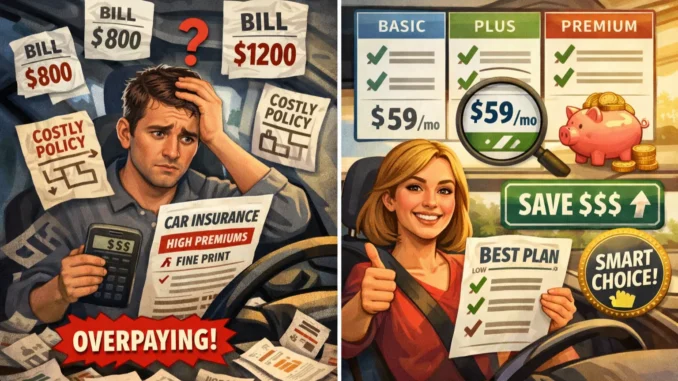
Why Most Drivers Overpay for Car Insurance (And Don’t Even Realize It)
Let’s start with a surprising truth:
Most drivers don’t overpay because insurance is expensive.
They overpay because of how they decide.
The Real Problem With Car Insurance Costs
Here’s what most people believe:
“Insurance is just expensive.”
So they accept the price.
Pay the premium.
And move on.
But that’s not the real issue.
The issue is decision-making.
Why Drivers Rarely Question Their Premium
Now consider this:
When was the last time you compared your policy?
Not switched.
Compared.
For most people…
It’s been years.
And that’s where overpaying begins.
Anchoring Bias: The First Price Trap
Here’s the first psychological trap:
The first quote you see becomes your reference point.
This is called anchoring bias.
So when you get a price like:
$120/month
Everything else feels relative to that.
Even if cheaper options exist.
You stop searching.
Because your brain says:
“This seems reasonable.”
Inertia: Why People Stay With the Same Provider
Now here’s the second trap:
People don’t like changing things.
This is inertia.
Even if switching could save money…
It feels like effort.
So people stay.
Renew automatically.
And keep overpaying.
The Auto-Renewal Habit
Here’s what happens every year:
- Your policy renews
- The price increases slightly
- You accept it
No comparison.
No optimization.
Just habit.
And over time?
That adds up.
Complexity Aversion: Why People Avoid Comparing
Let’s be honest:
Insurance feels complicated.
Different plans.
Different terms.
Different coverage levels.
So instead of comparing…
People avoid the process.
This is complexity aversion.
And it costs money.
The Hidden Cost of Overpaying
Now here’s the real impact:
Overpaying doesn’t feel painful.
Because it’s small… monthly.
But over time?
- Hundreds per year
- Thousands over time
All from passive decisions.
The Illusion of “Good Enough”
Here’s the biggest trap:
People don’t aim for the best deal.
They settle for “good enough.”
Because it feels safe.
And easy.
But “good enough”…
Is often overpriced.
The Breakthrough Shift
So instead of asking:
“Is this price okay?”
Ask this:
“Compared to what?”
Because comparison creates clarity.
And clarity reduces overpaying.
Car Insurance Is Price Psychology
This is the shift:
Car insurance is not just about coverage.
It’s about perception.
It’s about how you:
- Evaluate price
- Compare options
- Make decisions
And small changes in behavior…
Create big savings.
From Passive to Active Decisions
Once you understand this…
Everything changes.
You stop accepting prices.
And start questioning them.
Because better decisions…
Lead to lower costs.
What’s Next?
Now the real question is:
Which strategies actually help drivers save money on car insurance?
Because not all actions reduce costs.
Some do nothing.
Others create real savings.
High-Impact Strategies to Save Money on Car Insurance (Backed by Psychology)
Let’s get practical:
You now understand why drivers overpay.
But how do you actually fix it?
By changing how you decide.
Quick Strategy Breakdown
| Strategy | Psychological Trigger | Impact |
|---|---|---|
| Compare Multiple Quotes | Break anchoring bias | Lower premiums |
| Simplify Coverage | Reduce confusion | Better decisions |
| Bundle Policies | Perceived savings | Discounts |
| Usage-Based Insurance | Behavior tracking | Pay less for safe driving |
| Discount Optimization | Reward psychology | Extra savings |
| Review Annually | Break inertia | Continuous optimization |
1. Compare Multiple Quotes – Break the Price Anchor
Here’s the deal:
If you only see one price…
You can’t know if it’s good.
So always compare:
- At least 3–5 providers
- Same coverage levels
- Same deductibles
This resets your perception.
And reveals real market pricing.
2. Simplify Coverage – Avoid Overpaying for Confusion
Now consider this:
Many drivers overpay…
Because they don’t understand what they’re buying.
So they choose “more” to feel safe.
Instead:
- Focus on essential coverage
- Avoid unnecessary add-ons
- Match coverage to your needs
Clarity saves money.
3. Bundle Policies – Use Perceived Savings
Here’s a simple win:
Insurance companies reward bundling.
Combine:
- Car + home insurance
- Car + renters insurance
Why it works:
It feels like one decision.
And often lowers total cost.
4. Usage-Based Insurance – Pay for Behavior
This is where things get interesting:
Some insurers track driving behavior.
And reward safe drivers.
Examples:
- Low mileage
- Safe braking
- Consistent driving habits
If you drive safely…
You pay less.
5. Optimize Discounts – Don’t Leave Money on the Table
Here’s what most drivers miss:
Discounts are everywhere.
But rarely applied automatically.
Look for:
- Safe driver discounts
- Good student discounts
- Multi-policy discounts
Small savings… add up fast.
6. Review Annually – Break the Renewal Trap
This is critical:
Never auto-renew blindly.
Instead:
- Review your policy yearly
- Re-compare quotes
- Adjust coverage if needed
Because loyalty doesn’t always pay.
The Tools That Help You Save
Now let’s connect strategy with execution:
1. GEICO – Direct Pricing Advantage
GEICO offers competitive direct pricing.
- Best For: Simple policies
- Impact: Lower base premiums
2. Progressive – Usage-Based Savings
Progressive rewards safe driving behavior.
- Best For: Low-risk drivers
- Impact: Personalized pricing
3. The Zebra – Comparison Engine
The Zebra compares multiple insurers instantly.
- Best For: Price comparison
- Impact: Finds better deals
4. NerdWallet – Financial Insights
NerdWallet helps evaluate insurance options.
- Best For: Research & comparison
- Impact: Smarter decisions
5. Google Ads – High-Intent Search
Insurance searches often signal buying intent.
- Best For: Finding offers
- Impact: Access to competitive pricing
The Key Insight
Strategies break bad habits.
Tools make it easier.
But savings come from better decisions.
So Why Do People Still Overpay?
This is where psychology goes deeper.
Because even with better options…
People still make the same mistakes.
The Psychology Behind Car Insurance Decisions (Why Drivers Still Overpay)
Here’s the truth:
People don’t optimize car insurance.
They minimize effort.
Status Quo Bias: Why People Stick With the Same Policy
Let’s start here:
The brain prefers familiarity.
This is called status quo bias.
So even when better options exist…
People stay with what they know.
Because changing feels risky.
Even if it saves money.
Anchoring Bias (Revisited): Why First Prices Stick
Now here’s the second trap:
The first price you see becomes your reference.
And everything else feels relative.
So if your current premium is $150/month…
$140 feels like a win.
Even if $100 exists elsewhere.
This is how overpaying continues.
Loss Aversion: Why People Over-Insure
Here’s something important:
People fear losses more than they value savings.
This is loss aversion.
So instead of optimizing coverage…
They overprotect.
They choose:
- Higher coverage than needed
- Lower deductibles
- Extra add-ons
Because it feels safer.
But safety often comes at a higher cost.
The “What If” Trap
Now consider this:
Insurance decisions are driven by “what if” thinking.
And the more scenarios people imagine…
The more coverage they buy.
Examples:
- “What if I get into a major accident?”
- “What if repairs cost more than expected?”
These thoughts increase perceived risk.
And higher perceived risk = higher spending.
Effort Avoidance: Why People Don’t Compare
Let’s be honest:
Comparing insurance takes effort.
And the brain avoids effort.
So instead of:
Researching… comparing… optimizing…
People accept the current option.
This is effort avoidance.
And it’s expensive.
The Renewal Illusion
Here’s a subtle trick:
Auto-renewal makes staying feel like the default.
And defaults feel safe.
So people assume:
“If nothing changed… it must still be fine.”
But prices change.
Markets change.
And staying still often means overpaying.
The Core Insight
Drivers don’t overpay because they want to.
They overpay because of bias.
Because of habits.
Because of easy decisions.
And once you understand that…
You can fix it.
So How Do You Actually Choose the Best Policy?
This is where everything becomes actionable.
Because saving money is not about luck.
It’s about a system.
How to Choose the Best Car Insurance Without Overpaying
Now let’s turn insight into action:
You understand the biases.
You see the mistakes.
But here’s what matters most:
Making smarter decisions.
The Biggest Mistake Drivers Make
Let’s be clear:
Most drivers don’t choose insurance.
They accept it.
First quote.
Auto-renewal.
No comparison.
And that’s how overpaying continues.
The Smart Decision Framework
Here’s a simple system that works:
Compare → Customize → Optimize → Review
Follow this… and costs drop.
Step 1: Compare (Break the Default Behavior)
Start here:
Never rely on one quote.
Always compare:
- At least 3 providers
- Same coverage levels
- Same deductibles
This resets your price perception.
And reveals better options.
Step 2: Customize (Match Coverage to Reality)
Now refine your policy:
Don’t over-insure.
Don’t under-insure.
Align coverage with:
- Your driving habits
- Your car value
- Your financial situation
Because the right coverage…
Is not the most expensive one.
Step 3: Optimize (Adjust for Savings)
Here’s where savings happen:
Make small adjustments:
- Increase deductible (if manageable)
- Remove unnecessary add-ons
- Apply all available discounts
Each change lowers your premium.
Without sacrificing value.
Step 4: Review (Avoid the Renewal Trap)
This is critical:
Don’t set and forget.
Instead:
- Review annually
- Re-compare quotes
- Adjust as life changes
Because your situation evolves.
And your policy should too.
The “Good Enough” Trap to Avoid
Here’s something important:
Most people stop too early.
They find a decent price…
And settle.
But the best savings come from:
Going one step further.
The Identity Shift That Saves You Money
Let’s reframe your mindset:
You’re not just buying insurance.
You’re managing a financial decision.
And smart financial decisions:
- Question assumptions
- Compare options
- Optimize continuously
This shift changes everything.
From Passive Driver to Smart Buyer
This is the final insight:
Overpaying is passive.
Saving is intentional.
The more intentional you are…
The less you pay.
Your Next Step
Start today:
- Get 3 new quotes
- Review your current coverage
- Adjust one cost factor
- Set a yearly reminder
Because small actions…
Create big savings.
And once you align your decisions with how psychology works…
You won’t just save money.
You’ll make smarter financial choices every year.