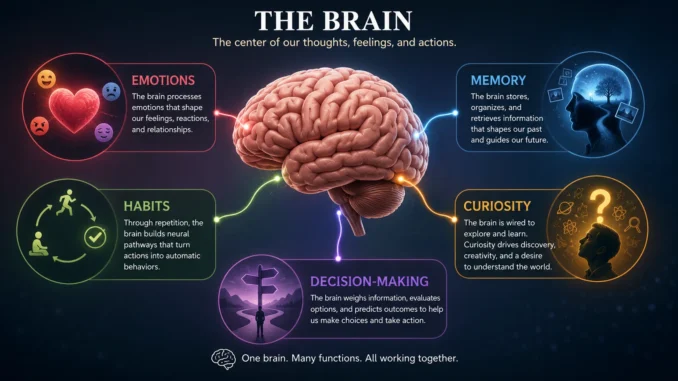
Human behavior is one of the most fascinating subjects in the world. Every day, people make thousands of decisions, form opinions, build relationships, and react to situations without fully understanding why they do what they do. While we often believe our actions are guided by logic and conscious thought, psychology tells a different story.
Much of human behavior is influenced by hidden mental shortcuts, emotional triggers, social pressures, and evolutionary instincts that operate beneath conscious awareness. These psychological mechanisms shape everything from the products we buy and the people we trust to the goals we pursue and the fears we experience.
The fascinating part is that many human behaviors are surprisingly predictable. Researchers have spent decades studying patterns in decision-making, memory, motivation, social interaction, and emotional responses. Their findings reveal that people are far less random than they appear.
Understanding these behaviors can help you make better decisions, improve relationships, avoid common mental traps, and gain deeper insight into why people act the way they do.
In this article, you’ll discover 25 mind-blowing facts about human behavior backed by psychological research, along with practical explanations that reveal how these hidden forces influence everyday life.
Why Human Behavior Is More Predictable Than We Think
People like to think they are completely unique in the way they think and behave. While individual personalities certainly differ, psychologists have discovered that many human actions follow remarkably consistent patterns.
The reason is simple: all human brains face similar challenges. We process information, manage emotions, evaluate risks, and make decisions using cognitive systems that evolved over thousands of years. These systems help us navigate daily life efficiently, but they also create predictable behaviors.
The Brain Uses Mental Shortcuts
The human brain processes an enormous amount of information every second. To avoid becoming overwhelmed, it relies on mental shortcuts known as heuristics.
These shortcuts help people make quick decisions without analyzing every detail. While efficient, they can also lead to predictable biases and errors in judgment. For example, people often trust familiar information more than unfamiliar information, even when the unfamiliar option may be more accurate.
Many of the surprising behaviors you’ll read about later in this article stem from these mental shortcuts.
Emotions Drive More Decisions Than Logic
Most people believe they make decisions logically and then experience emotions afterward. In reality, emotions frequently influence decisions first, while logic is used later to justify them.
Whether choosing a career, making a purchase, selecting a partner, or forming an opinion, emotional responses often shape choices before conscious reasoning begins.
This doesn’t mean humans are irrational. It simply means that emotion and logic work together far more closely than most people realize.
Understanding this principle makes many seemingly strange human behaviors much easier to explain.
25 Mind-Blowing Facts About Human Behavior
Fact #1: People Fear Loss More Than They Value Gain
Psychologists call this loss aversion. Research shows that losing $100 typically feels more painful than gaining $100 feels rewarding. This explains why people often avoid risks even when potential rewards outweigh possible losses.
Businesses use this principle constantly. Limited-time offers and free trials work because people become motivated to avoid losing something they already have.
Fact #2: First Impressions Form Within Seconds
Studies suggest people begin forming judgments about trustworthiness, competence, and likability within just a few seconds of meeting someone.
While first impressions are not always accurate, they can strongly influence future interactions and are surprisingly difficult to change.
Fact #3: Your Brain Loves Familiarity
The mere exposure effect shows that people tend to develop preferences for things they encounter repeatedly. Familiar faces, songs, brands, and ideas often feel more trustworthy simply because they’ve been seen before.
This tendency influences everything from advertising effectiveness to relationship choices.
Fact #4: People Remember Negative Events Longer
Negative experiences often leave stronger impressions than positive ones. This negativity bias evolved as a survival mechanism because remembering threats increased chances of survival.
As a result, one criticism may outweigh several compliments in a person’s memory.
Fact #5: Body Language Often Speaks Louder Than Words
Communication extends far beyond spoken language. Facial expressions, posture, eye contact, and gestures provide valuable information about emotions and intentions.
People frequently detect inconsistency between words and body language, which is why actions often influence trust more than verbal statements.
Fact #6: Decisions Are Often Emotional First
Many decisions that appear rational are actually influenced by emotions behind the scenes. People frequently make choices based on feelings and then create logical explanations afterward.
This psychological pattern affects everything from shopping habits to political opinions.
Fact #7: Social Proof Influences Behavior
When uncertain, people look to others for guidance. If a restaurant has a long line or a product has thousands of positive reviews, individuals often assume those choices are correct.
Humans are naturally influenced by group behavior.
Fact #8: Multitasking Reduces Performance
Contrary to popular belief, the brain doesn’t truly multitask well. Instead, it rapidly switches attention between tasks.
This constant switching increases errors, reduces productivity, and drains mental energy.
Fact #9: People Overestimate Future Happiness
Humans are surprisingly poor at predicting what will make them happy long-term. Achievements and possessions often provide less lasting satisfaction than expected.
This phenomenon is known as affective forecasting error.
Fact #10: Silence Creates Discomfort
Many people feel uncomfortable during extended silence in conversations. The brain often interprets silence as social uncertainty and attempts to fill the gap quickly.
Interestingly, skilled negotiators and interviewers often use silence strategically because it encourages others to reveal additional information.
Fact #11: People Prefer Simple Explanations
The human brain naturally seeks simplicity. When faced with complex information, people often gravitate toward explanations that are easy to understand, even if they are incomplete.
This tendency explains why simple stories, slogans, and narratives spread faster than detailed analyses. While simplicity can improve understanding, it can also lead people to overlook important nuances.
Fact #12: Confidence Is Often Mistaken for Competence
People frequently assume that confident individuals are more knowledgeable or capable than they actually are.
This psychological bias affects hiring decisions, leadership perceptions, and everyday interactions. Interestingly, truly competent individuals are often more aware of what they don’t know, making them appear less certain than overconfident individuals.
This phenomenon is closely related to the Dunning-Kruger Effect, where people with limited knowledge tend to overestimate their abilities.
Fact #13: Habits Shape Most Daily Actions
Many people believe they make conscious decisions throughout the day. In reality, a large portion of daily behavior is driven by habits.
From checking phones in the morning to following familiar routines at work, habits allow the brain to conserve energy by automating repetitive actions.
This is why changing behavior is often less about motivation and more about changing routines and environments.
Fact #14: People Seek Confirmation of Existing Beliefs
Humans naturally look for information that supports what they already believe. This tendency is known as confirmation bias.
When people encounter evidence that agrees with their views, they often accept it quickly. When they encounter conflicting evidence, they tend to scrutinize it more heavily or dismiss it altogether.
Confirmation bias influences everything from political opinions to personal relationships and purchasing decisions.
Fact #15: Curiosity Activates Reward Systems in the Brain
Curiosity is more than a personality trait. It’s a biological mechanism that encourages learning and exploration.
Research suggests that curiosity activates reward-related areas of the brain, making the discovery of new information feel satisfying. This explains why people enjoy solving mysteries, learning surprising facts, and seeking answers to unanswered questions.
Curiosity doesn’t just increase knowledge. It also improves memory because the brain pays closer attention to information it finds interesting.
Fact #16: Memory Is Less Reliable Than We Think
Many people view memory as a recording device that accurately stores past events. In reality, memory is reconstructive.
Each time a memory is recalled, the brain rebuilds it from stored fragments. As a result, memories can change over time and may become influenced by new information, emotions, or assumptions.
This is one reason eyewitness testimony is not always as accurate as people assume.
Fact #17: Sleep Affects Judgment More Than Most People Realize
A lack of sleep doesn’t simply cause tiredness. It affects decision-making, emotional regulation, concentration, and impulse control.
When sleep-deprived, people are more likely to take unnecessary risks, misinterpret social cues, and make poor judgments.
Consistent sleep is one of the most important factors influencing mental performance and behavior.
Fact #18: Emotions Are Contagious
People often absorb the emotions of those around them without realizing it. This phenomenon is known as emotional contagion.
Spending time with optimistic, enthusiastic people can improve mood, while prolonged exposure to negativity can have the opposite effect.
This psychological tendency helps explain why workplace culture, friendships, and family environments have such a powerful influence on well-being.
Fact #19: Scarcity Increases Perceived Value
People tend to value things more when they appear rare or limited.
Whether it’s a limited-edition product, an exclusive membership, or a time-sensitive opportunity, scarcity creates a sense of urgency that influences decision-making.
This behavior evolved because scarce resources often had greater survival value.
Fact #20: Small Wins Increase Motivation
Progress is one of the strongest motivators in human behavior.
Achieving small goals creates a sense of accomplishment that encourages continued effort. This is why breaking large projects into smaller milestones often increases productivity and persistence.
The brain responds positively to visible progress, making momentum a powerful force for long-term success.
Fact #21: People Crave Social Belonging
Humans are inherently social creatures. Throughout history, belonging to a group increased survival chances, making social connection a deeply rooted psychological need.
This need influences friendships, communities, workplace culture, and even online behavior. Feeling excluded can trigger emotional responses similar to physical pain.
Fact #22: More Choices Can Make Decisions Harder
While having options seems beneficial, too many choices can create decision paralysis.
When faced with numerous alternatives, people often become overwhelmed, second-guess their decisions, or avoid making a choice altogether.
This phenomenon is commonly known as the paradox of choice.
Fact #23: People Judge Themselves Differently Than Others
Most people evaluate their own actions based on intentions while judging others based on outcomes.
For example, someone may excuse their own mistake because they had good intentions but criticize another person for making a similar mistake.
This difference in perspective contributes to many interpersonal misunderstandings.
Fact #24: Expectations Shape Reality
What people expect often influences what they experience.
Positive expectations can improve performance, confidence, and outcomes, while negative expectations can create self-fulfilling prophecies.
This principle appears in psychology through phenomena such as the placebo effect and expectancy theory.
Fact #25: Humans Are Naturally Story-Driven
Stories are one of the oldest and most powerful forms of communication. The human brain processes stories differently from isolated facts because narratives create emotional engagement and meaning.
This is why people remember stories more easily than statistics and why storytelling remains central to education, leadership, marketing, and culture.
Stories help people make sense of complex information, connect with others, and understand their place in the world.
What These Facts Teach Us About Human Nature
At first glance, these facts may seem unrelated. However, together they reveal several important truths about human nature.
Understanding Yourself Better
Many behaviors that feel personal are actually shared by millions of people. Recognizing biases, emotional influences, and mental shortcuts can help you make better decisions and avoid common psychological traps.
Self-awareness is often the first step toward personal growth.
Improving Relationships
Understanding how people think, feel, and communicate can improve relationships significantly.
When you recognize that emotions, biases, and social needs influence behavior, it becomes easier to empathize with others and respond more effectively during disagreements or misunderstandings.
Making Better Decisions
Many of the facts in this article highlight predictable decision-making errors. By understanding these patterns, you can slow down important decisions, challenge assumptions, and evaluate information more objectively.
The goal isn’t to eliminate human biases completely. It’s to recognize when they may be influencing your judgment.
The more you understand human behavior, the better equipped you become to navigate everyday life, relationships, and personal growth.
Key Takeaways
Human behavior may seem unpredictable on the surface, but psychology reveals that many of our actions follow consistent patterns shaped by evolution, emotions, cognitive biases, and social influences.
The 25 facts explored in this article highlight an important reality: people are influenced by forces they often don’t consciously recognize. From loss aversion and social proof to emotional contagion and confirmation bias, these psychological mechanisms affect how we think, decide, communicate, and interact with the world.
- People are more motivated to avoid losses than achieve gains.
- First impressions form surprisingly quickly.
- Emotions often influence decisions before logic does.
- Habits drive a large percentage of daily behavior.
- Memory is reconstructive rather than perfectly accurate.
- Social belonging is a fundamental human need.
- Too many choices can make decisions harder.
- Curiosity activates reward systems that encourage learning.
- Small wins create momentum and motivation.
- Stories are one of the most powerful ways humans process information.
The more you understand these patterns, the better equipped you’ll be to improve your decision-making, strengthen relationships, communicate effectively, and develop greater self-awareness.
Human behavior is fascinating because it sits at the intersection of biology, psychology, culture, and experience. Learning how these forces work can help you better understand both yourself and the people around you.
Frequently Asked Questions
Why do humans behave the way they do?
Human behavior is influenced by a combination of biology, emotions, cognitive processes, social environments, life experiences, and evolutionary instincts. These factors work together to shape how people think, feel, and act.
What influences human behavior the most?
No single factor determines behavior. However, emotions, social influences, habits, cognitive biases, and environmental conditions are among the strongest influences on human actions and decisions.
Can human behavior be predicted?
While individual actions cannot always be predicted with certainty, psychologists have identified many behavioral patterns that occur consistently across large groups of people. This makes certain behaviors surprisingly predictable.
Why do emotions affect decision making?
Emotions help the brain evaluate situations quickly and prioritize responses. They provide important information, but they can also introduce biases that influence judgment and decision-making.
What is the most surprising psychology fact?
One of the most surprising findings is that people often make decisions emotionally and then use logic afterward to justify those decisions. Many choices that feel rational are influenced by subconscious emotional processes.