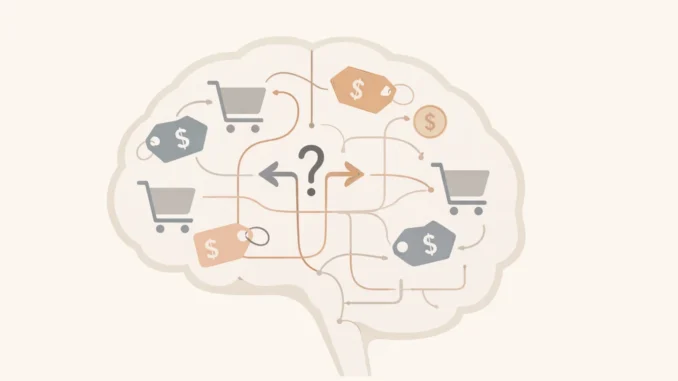
Consumer psychology explains how people think, feel, and decide when making a purchase—and understanding it can dramatically increase conversions. Instead of relying on guesswork, businesses use psychological triggers, behavioral patterns, and decision-making principles to influence buying behavior and drive more sales.
Here’s the part most people miss: customers don’t buy based purely on logic. They buy based on perception, emotion, and subtle mental shortcuts. Price matters, but how the price is presented matters more. Features matter, but how they are framed often matters even more.
I’ve seen this play out repeatedly. A simple change—like repositioning a price or adding social proof—can outperform a complete product redesign. Not because the product changed, but because the perception did.
That’s what consumer psychology really is: understanding the invisible factors that shape decisions. Once you understand those patterns, you stop guessing and start designing experiences that naturally lead people to say yes.
In this guide, you’ll learn how buying decisions actually happen—and how to apply proven psychological principles to increase conversions, improve marketing performance, and influence customer behavior in a way that feels natural, not forced.
What Is Consumer Psychology?
Consumer psychology is the study of how people think, feel, and behave when making buying decisions. It focuses on the mental triggers, emotional responses, and subconscious patterns that influence whether someone clicks, buys, or walks away.
Why People Buy (Not What You Think)
Most businesses assume customers make logical decisions—compare features, evaluate price, then choose the best option. That rarely happens.
In reality, people decide emotionally and justify logically. A product “feels right” first. The reasoning comes later. This is why two nearly identical products can perform completely differently depending on how they’re presented.
For example, a product described as “limited availability” instantly feels more valuable than one that’s always in stock. Nothing changed about the product—only the perception did.
This is the core idea behind consumer psychology: people don’t respond to reality, they respond to how reality is framed.
The Hidden Drivers Behind Purchase Decisions
Behind every purchase are invisible forces shaping the decision. These include cognitive biases, emotional triggers, and environmental cues that most customers aren’t even aware of.
Things like urgency, trust signals, social proof, and even color choices can influence behavior. A countdown timer can increase conversions. A single testimonial can reduce hesitation. A higher price can sometimes increase perceived quality.
I’ve seen businesses struggle with low sales, only to fix it by adjusting one psychological trigger—no product changes required. That’s how powerful these hidden drivers are.
Once you understand them, you stop focusing only on what you’re selling—and start focusing on how people experience it.
How Consumer Psychology Influences Buying Decisions
Every purchase decision follows a pattern—but not the logical one most people expect. Instead of carefully analyzing options, customers rely on a mix of emotion, bias, and mental shortcuts to make faster decisions.
Understanding these patterns allows you to predict behavior and design experiences that guide customers toward action—without forcing it.
Emotional vs Rational Buying
People like to believe they make rational decisions. In reality, emotion leads and logic follows.
A customer might buy a product because it feels exciting, सुरक्षित, or status-enhancing. Only afterward do they justify the purchase with reasons like price, features, or necessity.
This is why storytelling, branding, and emotional messaging outperform purely technical descriptions. A product that connects emotionally will almost always convert better than one that only lists specifications.
The key insight: if your marketing only speaks to logic, you’re missing the real driver of action.
The Role of Cognitive Biases in Purchases
Cognitive biases are shortcuts the brain uses to simplify decisions. They help people act quickly—but they also make behavior predictable.
For example, anchoring bias causes customers to rely heavily on the first price they see. If the original price is high, the discounted price feels like a better deal—even if it’s still expensive.
Another example is loss aversion. People are more motivated to avoid losing something than to gain something new. This is why phrases like “Don’t miss out” or “Last chance” are so effective.
These biases don’t manipulate—they simplify decision-making. And when used correctly, they reduce hesitation instead of creating pressure.
Social Proof and Trust Signals
When people are unsure, they look to others for guidance. This is known as social proof—and it’s one of the strongest influences on buying behavior.
Reviews, testimonials, ratings, and user-generated content all serve the same purpose: reducing uncertainty. If others trust it, it feels safer to buy.
I’ve seen pages double their conversion rate just by adding authentic customer reviews. No redesign. No pricing change. Just trust.
In a crowded market, trust often matters more than the product itself. And social proof is how you build it quickly.
7 Consumer Psychology Triggers That Increase Sales
If you understand what drives decisions, you don’t need to push customers—you guide them. These psychological triggers are used across high-performing websites, ads, and sales funnels because they align with how people naturally think and act.
1. Scarcity (Limited Time or Stock)
People assign more value to things that feel limited. When availability is restricted, urgency increases—and hesitation decreases.
That’s why phrases like “Only 3 left” or “Offer ends today” work so well. They shift the decision from “Should I buy?” to “Will I miss out?”
2. Anchoring (Pricing Strategy)
The first number a customer sees becomes a reference point. This is called anchoring.
If a product is originally priced at $200 and discounted to $99, the second price feels like a deal—even if $99 is still high. Without the anchor, perception changes completely.
3. Loss Aversion
People fear losing more than they value gaining. This is one of the strongest drivers of action.
Messaging like “Don’t miss this opportunity” or “Avoid costly mistakes” often performs better than highlighting benefits alone.
4. Authority Bias
Customers trust experts, brands, and credible sources. When authority is present, resistance drops.
This is why certifications, expert endorsements, and “trusted by” logos increase conversions—they signal reliability without requiring deep evaluation.
5. Reciprocity
When people receive value first, they feel more inclined to give something back. This is the principle of reciprocity.
Free guides, trials, or useful content build goodwill. That goodwill often turns into purchases later.
6. Social Proof
People look at others to decide what’s correct. Reviews, testimonials, and user numbers reduce uncertainty and increase trust.
A product with 1,000 positive reviews will almost always outperform one with none—even if the quality is the same.
7. Framing Effect
The way information is presented changes how it’s perceived. This is known as framing.
For example, “90% success rate” feels more appealing than “10% failure rate,” even though both mean the same thing. Small wording changes can significantly impact decisions.
These triggers don’t manipulate customers—they align with natural decision-making patterns. When used correctly, they make the buying process feel easier, clearer, and more intuitive.
Psychological Pricing Strategies That Work
Pricing isn’t just about numbers—it’s about perception. The same product can feel cheap, expensive, or high-value depending on how the price is presented. That’s why businesses don’t just set prices—they design them.
Understanding pricing psychology allows you to influence how customers interpret value, making them more likely to buy without changing the product itself.
Charm Pricing ($9.99 Effect)
Prices ending in .99 or .95 consistently outperform rounded numbers. A product priced at $9.99 feels significantly cheaper than $10—even though the difference is minimal.
This happens because customers read prices from left to right, placing more emphasis on the first digit. The result? $9.99 feels closer to $9 than $10.
It’s a small adjustment, but it can noticeably increase conversions, especially in e-commerce.
Decoy Pricing Strategy
The decoy effect works by introducing a third option that makes another choice look more attractive.
For example, if you offer:
- Basic: $10
- Standard: $20
- Premium: $20 (with more features)
Most people will choose Premium—not because they planned to, but because it feels like a better deal compared to the decoy option.
This strategy guides decisions without removing choice, making it highly effective in pricing tiers and subscription models.
Price Anchoring in E-commerce
Anchoring works by setting a reference point before showing the actual price. This makes the final price feel more reasonable.
Common examples include:
- Showing “Was $199, now $99”
- Displaying premium options before cheaper ones
- Highlighting the “most popular” plan
Without an anchor, customers evaluate a price in isolation. With an anchor, they evaluate it in comparison—and comparison is where perceived value increases.
When used together, these pricing strategies don’t just change numbers—they reshape how customers think about value, which directly impacts conversions.
How to Apply Consumer Psychology in Marketing
Understanding consumer psychology is one thing. Applying it effectively is what drives results. The goal isn’t to manipulate customers—it’s to remove friction, build trust, and make decisions feel easier.
When applied correctly, small psychological adjustments can outperform major redesigns or expensive campaigns.
Landing Page Optimization
Your landing page is where decisions happen. Every element—headline, layout, visuals, and call-to-action—should guide the user toward a clear outcome.
Start by reducing cognitive load. Too many options create confusion and delay decisions. Instead, focus attention on one primary action.
Use psychological triggers like:
- Social proof: testimonials, reviews, user counts
- Scarcity: limited-time offers or stock indicators
- Clarity: simple, benefit-driven headlines
Even small changes—like simplifying a headline or repositioning a button—can significantly increase conversions.
Ad Copy That Converts
Most ads fail because they focus on features instead of outcomes. Consumers don’t buy products—they buy results, feelings, and solutions.
High-performing ad copy taps into emotion first, then supports it with logic. Instead of saying “Advanced software with multiple features,” say “Save hours every week without extra effort.”
Effective ad copy often includes:
- Emotional triggers (fear of missing out, desire for improvement)
- Clear benefits (time saved, money gained, stress reduced)
- Simple, direct language (no complexity or jargon)
The simpler the message, the faster the decision.
UX Design and Buying Behavior
User experience plays a direct role in consumer behavior. A confusing interface increases friction, while a smooth experience builds confidence.
For example, progress indicators reduce uncertainty during checkout. Clear pricing reduces hesitation. Visual hierarchy guides attention to key elements.
I’ve seen businesses improve conversions simply by removing unnecessary steps from their checkout process. No new traffic. No new offers. Just better design.
When psychology and design work together, the buying process feels natural—not forced. And that’s when conversions increase consistently.
Frequently Asked Questions (FAQ)
What is consumer psychology in marketing?
Consumer psychology in marketing is the study of how customers think, feel, and make purchasing decisions. It helps businesses understand behavior patterns, emotional triggers, and cognitive biases to design marketing strategies that increase conversions.
Why is consumer psychology important?
Consumer psychology is important because it explains why people buy. Instead of guessing, businesses can use psychological insights to reduce hesitation, build trust, and guide customers toward making a purchase more easily.
What are examples of buying behavior?
Examples of buying behavior include impulse purchases, brand loyalty, comparison shopping, and emotional buying. These behaviors are influenced by factors like pricing, social proof, urgency, and personal preferences.
How do businesses influence customer decisions?
Businesses influence customer decisions using psychological triggers such as scarcity, social proof, authority, and pricing strategies. These techniques shape how customers perceive value and reduce uncertainty during the buying process.
What is psychological pricing?
Psychological pricing is a strategy that uses pricing techniques to influence perception. Examples include charm pricing ($9.99), price anchoring, and decoy pricing, all designed to make products feel more valuable or affordable.